

NIMS ICS-300 / ICS-400
Incident Command System Course
Overview
Probie Fire Training delivers instructor-led ICS-300 and ICS-400 training for fire and emergency services personnel who operate within the National Incident Management System (NIMS).
These courses move beyond basic ICS concepts and prepare current and emerging leaders to manage expanding, complex, and multi-agency incidents. Through discussion, practical exercises, and scenario-based application, students strengthen their ability to operate effectively within Command and General Staff functions and increasingly complex incident management organizations.
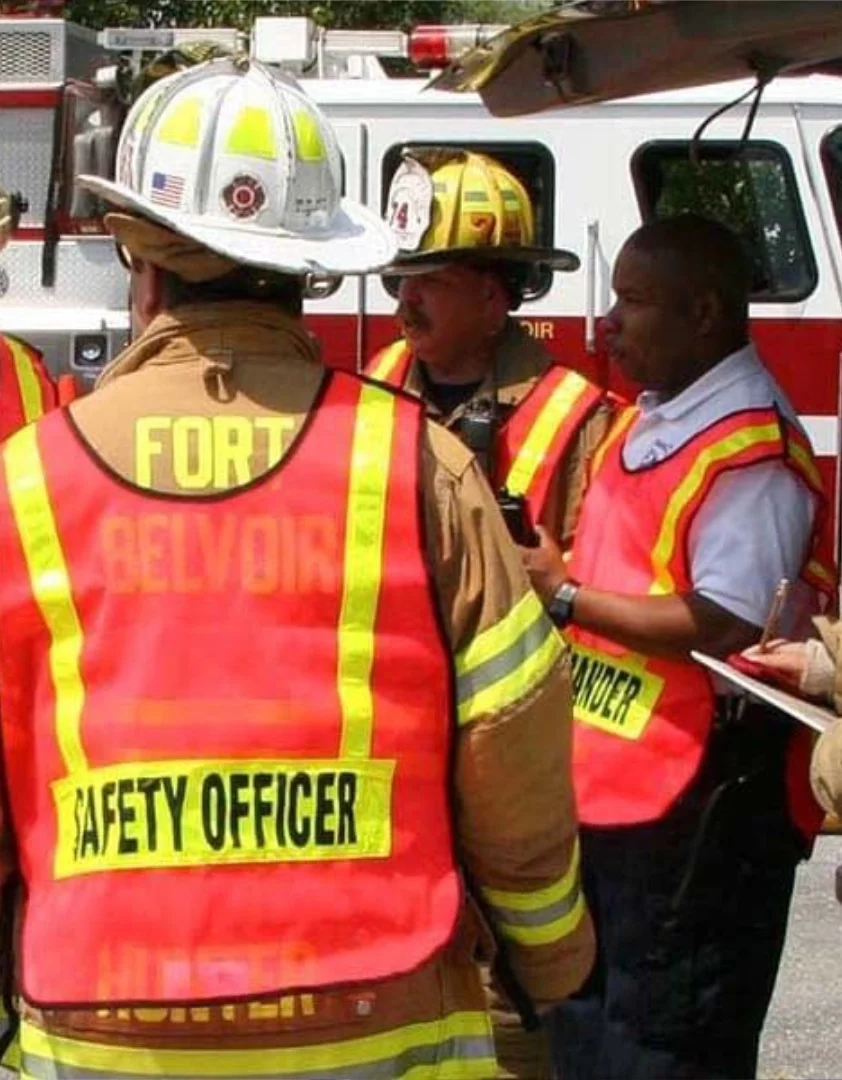
Designed with fire and emergency services in mind, Probie brings real-world command experience into the classroom, connecting NIMS doctrine to the operational realities responders face during major incidents, planned events, and multi-agency operations.
5 days of instruction
DURATION
On-site
METHOD
No Limit
Max CLASS SIZE
40 hours*
TOTAL HOURS
*FEMA currently requires at least 21 classroom hours for ICS-300 and 16 for ICS-400.
Course Options
ICS-300: Intermediate ICS for Expanding Incidents
ICS-300 provides advanced knowledge and application of the Incident Command System for personnel who may assume supervisory or leadership roles during expanding incidents. The course builds upon ICS-100 and ICS-200 and emphasizes practical application of ICS principles.
Minimum Classroom Hours: 21 hours
ICS-400: Advanced ICS for Command and General Staff
ICS-400 prepares experienced personnel for advanced application of ICS during complex incidents. The course expands upon ICS-100 through ICS-300 and focuses on the command and coordination challenges associated with major incidents, Area Command, and multi-agency coordination.
Minimum Classroom Hours: 16 hours
Learning Objectives
Upon completion, participants will be able to:
Apply ICS principles during expanding and complex incidents

Organize and manage increasingly complex incident command structures
Perform effectively within Command and General Staff functions
Develop and apply incident objectives, strategies, and organizational structures
Coordinate resources across agencies and jurisdictions
Apply unified command concepts during multi-agency incidents
Understand Area Command and multi-agency coordination concepts
Integrate NIMS principles into real-world emergency operations
*ICS-300 students should have completed ICS-100, ICS-200, IS-700, and IS-800 before attending. ICS-400 students should have completed ICS-100, ICS-200, ICS-300, IS-700, and IS-800 before attending. FEMA also recommends practical experience applying ICS concepts before progressing to ICS-400.
Build Your Department's Incident Command Capability
Who Is the Course For?
Fire Officers, Chief Officers, Incident Commanders, Command and General Staff personnel, emergency managers, Training Officers, and other emergency response professionals who may assume leadership or coordination responsibilities during expanding or complex incidents.
Ideal for Department of War Fire & Emergency Services, municipal fire departments, industrial fire brigades, and other emergency response organizations.
What’s Included?
Instructor-led, in-person classroom training
Student course materials and instructional resources
Practical exercises and incident-management scenarios
Course-completion documentation for eligible participants
Instructor travel to your training location
Turnkey scheduling and coordination with your Training Office
Frequently Asked Questions
-
Probie Fire Training instructors bring extensive real-world fire service leadership and incident command experience into the classroom. Rather than simply teaching terminology, our goal is to help students understand how ICS functions when incidents become larger, more complex, and more demanding.
Training is delivered on-site, allowing departments to develop their personnel together while minimizing travel and scheduling impacts.
-
ICS-300 and ICS-400 are intermediate and advanced Incident Command System courses for personnel who may lead, supervise, or coordinate operations during expanding, complex, or multi-agency incidents.
Both courses build upon the foundational concepts introduced in ICS-100 and ICS-200 through instructor-led discussion, practical exercises, and scenario-based application.
-
ICS-300 focuses on managing expanding incidents and prepares personnel to perform supervisory, Command Staff, and General Staff functions within a developing incident organization.
ICS-400 addresses more complex command and coordination challenges, including major incidents, Area Command, Unified Command, and multi-agency coordination. It is intended for experienced personnel who have already completed ICS-300.
-
ICS-300 is appropriate for Fire Officers, Incident Commanders, Command and General Staff personnel, emergency managers, Training Officers, and other responders who may assume supervisory or leadership responsibilities during an expanding incident.
-
ICS-400 is intended for experienced incident-management personnel who may serve in advanced command, coordination, or General Staff positions during complex incidents. Participants should already understand and have experience applying foundational and intermediate ICS concepts.
-
Before attending ICS-300, students should complete:
ICS-100
ICS-200
IS-700
IS-800
These prerequisite courses provide the foundational ICS and NIMS knowledge needed for intermediate classroom application.
-
Before attending ICS-400, students should complete:
ICS-100
ICS-200
ICS-300
IS-700
IS-800
Practical experience applying ICS concepts is also recommended before progressing to ICS-400.
-
ICS-300 requires a minimum of 21 classroom hours.
ICS-400 requires a minimum of 16 classroom hours.
Scheduling may vary based on the department’s operational needs and the daily training schedule, but each course must include its required classroom hours.
-
Probie delivers ICS-300 and ICS-400 as instructor-led, interactive classroom courses at your installation or department. The on-site format supports group discussion, practical exercises, and scenario-based application that connects ICS doctrine to real emergency operations.
-
Yes. Departments can request ICS-300, ICS-400, or both courses. When both are scheduled, students must complete the required prerequisites and progress through the courses in the proper sequence.
-
epending on the course, participants will learn how to:
Manage expanding and complex incident organizations
Perform Command and General Staff functions
Develop incident objectives, strategies, and organizational structures
Coordinate resources across agencies and jurisdictions
Apply Unified Command concepts
Understand Area Command and multi-agency coordination
Integrate NIMS principles into emergency operations
-
Yes. Both courses use discussion, practical exercises, and incident-management scenarios to help students apply ICS concepts. The goal is to move beyond terminology and strengthen decision-making within increasingly complex incident organizations.
-
Probie delivers ICS-300 and ICS-400 on-site at your installation or department. This allows departments to train personnel together while reducing outside travel and simplifying coordination with the Training Office.
-
Agency packages can include instructor-led classroom training, student course materials, practical exercises and scenarios, course-completion documentation, instructor travel, and turnkey coordination with the department’s Training Office.
-
Students who satisfy the applicable attendance and course requirements receive course-completion documentation. Departments should verify any additional recordkeeping or credentialing requirements established by their jurisdiction or agency.
-
No. ICS-300 and ICS-400 are NIMS Incident Command System training courses. Participants receive applicable course-completion documentation rather than a Pro Board certification through FDSOA.
-
No. Although Probie delivers the courses with fire and emergency services operations in mind, ICS-300 and ICS-400 are also relevant for emergency managers, industrial response organizations, and other personnel who may coordinate expanding or multi-agency incidents.
-
Contact Probie Fire Training with your preferred course, training dates, location, estimated number of students, and agency requirements. Probie will work with your Training Office to coordinate an on-site delivery plan.